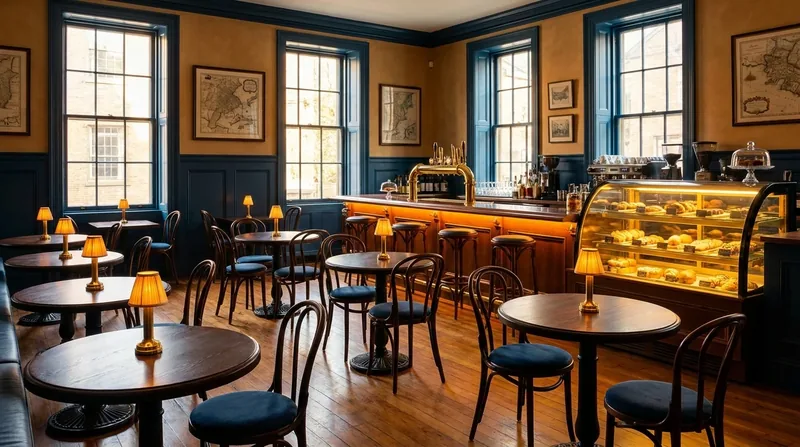
How to Start a Restaurant in Virginia: VDH Permit $40 Plus $40, CFPM Required and 2026 ABC Food Ratio Change
If you want to start a restaurant in Virginia, the first thing to understand is that no single office hands you a restaurant license. Five layers of government each approve a piece of the operation: the Virginia Department of Health (VDH) for the food permit, the Virginia Alcoholic Beverage Control Authority (ABC) for alcohol, your local building department for permits and the certificate of occupancy, the local fire official, and your city or county for the business license and meals tax. This guide covers how to start a restaurant business in Virginia in order of importance, with the fees and clear notes where you need to confirm a number with an agency.
Disclaimer: This article is informational content, not legal or tax advice. Restaurant formation touches zoning, licensing, employment, and tax law. Talk with a Virginia attorney and a CPA before you sign a lease or hire staff.
Materials and Documents to Gather First
Gather these before you file anything. Most delays come from missing paperwork, not from the agencies.
- A signed lease, or a near-final lease, for the location
- Scaled floor plans showing rooms, storage, lights, plumbing, and fixed equipment
- An equipment list with manufacturer specification sheets for each piece
- Your proposed menu
- Certified Food Protection Manager (CFPM) credentials for your supervisory staff
- A site plan if you are building new construction
- Septic or well paperwork if the property is not on public water and sewer
- Formation documents: Articles of Organization (Form LLC1011) or Articles of Incorporation (Form SCC619)
- Your seat count, separating seats at tables from counter seats, since this sets your ABC fees and food ratio
- A realistic sales forecast, so you can see which ABC food ratio tier your concept may fall into
Who Handles What
| Layer | Agency | What it covers | When to start |
|---|---|---|---|
| Food permit | Virginia Department of Health, through your local health department | Plan review, foodservice permit, inspection | Plan review as soon as your lease is signed |
| Alcohol | Virginia ABC | Mixed beverage restaurant license or other license | As soon as your lease is signed |
| Building | Local building department | Building permits, certificate of occupancy, signage permits | Before construction |
| Fire | Local fire official | Hood and fire suppression inspection | During build-out |
| Business and meals tax | Your city or county, usually the commissioner of the revenue | BPOL license and meals tax | Before you open |
Step-by-Step: Opening a Virginia Restaurant
Step 1: Sign the lease, then start the VDH plan review and ABC application
The VDH plan review and the ABC application are the longest-lead filings, so start both as soon as your lease is signed and before construction begins. Do not plan around a processing time you have not confirmed. Ask each agency for its current timeline when you file. Some health districts use their own forms, so call your local health department early.
Step 2: Form your entity and register your name
The State Corporation Commission (SCC) forms entities but issues no business license. The LLC Articles of Organization cost $100. Filing options online through the SCC Clerk's Information System at cis.scc.virginia.gov include expedited service, which is online only and nonrefundable:
- Next day for $50 or $100 (submitted by 2:00 PM Eastern, response by 4:00 PM the next business day)
- Same day for $200 (submitted by 10:00 AM Eastern, response by 4:00 PM)
An LLC name must contain “limited company,” “limited liability company,” “LC,” “L.C.,” “LLC” or “L.L.C.” and be distinguishable from names already on file. You can reserve a name for $10 for 120 days, and the reservation can be renewed in the 45 days before it expires. If you will operate under a name other than your legal name, file an Assumed Name Certificate with the SCC for $10. It is filed with the SCC, not the circuit court, and requires no newspaper publication.
Virginia LLCs file no annual report. They pay a $50 annual registration fee to the SCC, due the last day of the 12th month after the month the LLC was organized, and every year after. A late payment adds a $25 penalty, and the LLC is canceled at the end of the third month after the due date.
If you form a stock corporation instead, Articles of Incorporation (Form SCC619) cost $75. The annual report and registration fee depend on authorized shares, so check the SCC annual fee schedule at scc.virginia.gov/businesses.
Your registered agent must be a Virginia resident with a Virginia street address, available during business hours, and either a member of the Virginia State Bar or a member, manager, officer, trustee or general partner of the entity. The entity cannot be its own agent.
Step 3: Submit the VDH plan review with the $40 fee
Before you build or remodel, submit a plan review application with a $40 fee to the local health department for the locality where the restaurant will operate. Include:
- Scaled floor plans with rooms, storage, lights, plumbing, and fixed equipment
- An equipment list with specification sheets
- The proposed menu
- CFPM credentials
- A site plan for new construction, plus separate septic or well paperwork where applicable
Hold off on committing to fixed equipment or a finished layout until you have the plan review response. A plan review changes the cost of your build-out, so it pays to finish it first.
Step 4: Build out with local permits and the fire inspection
Your local building department issues building permits, the certificate of occupancy, and signage permits. The local fire official inspects the hood and fire suppression system. Each locality sets its own process, so confirm the sequence with both offices before you order equipment.
Your contractor's license class matters too. Since July 1, 2025, Virginia contractor classes are Class C for jobs over $1,000 to under $30,000, Class B for $30,000 to under $150,000, and Class A for $150,000 or more. Check the contractor's license through the Department of Professional and Occupational Regulation (DPOR) and confirm it covers your project's value.
Step 5: Certify a CFPM before you open
Every food establishment must have at least one employee with supervisory and management authority who is a Certified Food Protection Manager (CFPM). The credential must come from an ANSI-accredited program recognized by the Conference for Food Protection, unless the establishment meets the exemptions in 12VAC5-421-55 B or Va. Code 35.1-25.
Virginia has no statewide food handler card rule. Do not assume an employee card requirement from another state applies here. For other employee training, check with your local health department.
Step 6: Apply for the ABC license
A restaurant that serves spirits needs a mixed beverage restaurant license. A restaurant that serves only beer and wine needs a different license, so confirm with ABC which one fits your concept. The state annual fee depends on seats at tables under Va. Code 4.1-231.1, and local fees are capped by Va. Code 4.1-233.1:
| Seats at tables | Mixed beverage restaurant state fee | Local fee cap (statutory maximum) |
|---|---|---|
| Up to 100 | $1,050 | $200 |
| 101 to 150 | $1,495 | $350 |
| 151 to 500 | $1,980 | $500 |
| 501 to 1,000 | $2,500 | $650 |
| Over 1,000 | $3,100 | $800 |
The limited mixed beverage restaurant license costs $945 in state fees for up to 100 seats, $1,385 for 101 to 150 seats, and $1,875 for over 150 seats. Its local fee caps are $100, $250 and $400 in the same tiers. Local fees are statutory maximums, so confirm the amount your locality actually charges. Check with ABC for its application fee and processing time before you budget for them.
Step 7: Submit the foodservice permit application and request inspection
After VDH approves your plan, submit the foodservice permit application with a $40 fee to the local health department at least 30 days before you open. Then request the inspection. The permit issues when the facility passes. This 30-day requirement applies to the permit application before opening, not to the plan review.
A change of ownership needs its own application. If you buy a closed restaurant, you cannot assume the previous owner's permit.
Step 8: Register for sales tax and the local business license
Register with Virginia Tax for a sales tax permit at tax.virginia.gov/sales-and-use-tax. Prepared food is taxable. The state sales tax is 5.3% base, state plus local, with higher rates in some localities: 6% in the regional-tax localities, 6.3% in eight localities, and 7% in the Historic Triangle (James City County, Williamsburg and York County). The grocery rate is 1%.
Virginia has no general statewide business license. The Business, Professional and Occupational License (BPOL) is a local license tax under Va. Code 58.1-3700 and following, administered by each city or county, usually through the commissioner of the revenue. Not every locality levies a general license, and Va. Code 58.1-3704 allows a locality to levy none. Stafford, Rockingham, Bedford County, Washington County, Montgomery County, Louisa and Fluvanna are examples of localities without a general county license. Towns can displace the county tax, so check the city, county and any town where you will operate.
Where a locality does levy BPOL, the statutory floor depends on population. A locality over 50,000 people cannot require a license for gross receipts under $100,000. A locality of 25,000 to 50,000 people cannot require one for gross receipts under $50,000. No floor applies to localities under 25,000. Localities over 50,000 may waive the license up to $200,000 (verify the waiver ceiling with your commissioner of the revenue). Rates and filing deadlines are set by each locality, so do not apply one locality's rate to another.
Meals tax is also local. Counties may levy a meals tax up to 6% under Va. Code 58.1-3833. City rates are set by each city, so confirm yours before you set menu prices.
Step 9: Plan payroll, insurance and wages
Workers' compensation coverage is required once you have three or more employees under Va. Code 65.2-101. Failing to carry it can bring a penalty of up to $250 a day, capped at $50,000 under 65.2-805. Virginia's minimum wage is $12.77 in 2026, $13.75 in 2027 and $15.00 in 2028, so build those rates into your labor budget.
The 2026 ABC Food Ratio Change
Under HB 975, the food ratio for mixed beverage licensees changed on July 1, 2026. The requirement depends on average monthly food sales:
| Average monthly food sales | Food requirement |
|---|---|
| $48,000 or more | No ratio applies |
| $25,000 to under $48,000 | Food must be at least 30 percent |
| $4,000 to under $25,000 | 45 percent, or 30 percent for a restaurant under 30 seats with an occupancy permit under 60 people |
Three rules matter for design. Table seats must at least equal counter seats. Beer and wine do not count toward the food ratio. And ABC rules may lag the statute, so confirm the tier that applies to you, and how ABC measures monthly sales for a new restaurant with no sales history, before you finalize your seating plan or liquor-heavy menu.
New Virginia Food Regulations (Effective September 10, 2026)
Updated Virginia Food Regulations took effect September 10, 2026, following the FDA Food Code. Build these into your menu, prep area and training:
- Allergen disclosure: Nine major food allergens must be disclosed for packaged and unpackaged foods: milk, eggs, fish, crustacean shellfish, tree nuts, peanuts, wheat, soybeans and sesame. Disclosure can use words, icons or numbers with a legend, a handout, or a QR code.
- Handwashing water: The minimum hot water temperature at handwashing sinks is now 85 degrees F, down from 100.
- Person in charge: A low-risk facility may skip having the person in charge on site at all times if the local health department approves.
VDH is drafting more allergy notice rules. Check VDH for 2027 changes before you finalize your menu labeling.
Common Mistakes to Avoid
- Building before plan review. Starting construction before the VDH plan review is approved can force rework.
- Mixing up the two 30-day rules. The 30 days applies to the foodservice permit application before opening. It is not a deadline for the plan review.
- Assuming you inherit the permit. A new owner of an existing restaurant needs its own application.
- Assuming a statewide food handler card. Virginia requires a CFPM, not a food handler card. Confirm other training with your local health department.
- Assuming one BPOL rate. Whether your locality levies BPOL, and at what rate, is local.
- Ignoring the food ratio in your layout. Counter and table seating and your food sales forecast both affect which ABC tier applies.
- Skipping the town check. A town can displace the county tax, so check every jurisdiction where you will operate.
Expected Results
Following this sequence may help you avoid rework and keep your filings in order. A complete plan review package may help the health department reach a decision with fewer follow-up questions. Agency workloads, your project's complexity and your locality's procedures will all affect the outcome, so this guide does not promise any processing time, approval date or sales result.
What Startup Costs Look Like
Startup costs for a restaurant vary widely with location, size, build-out scope and equipment. Get written quotes for construction, equipment and insurance before you sign anything. The government fees in this guide are only part of the total.
Official Resources
- State Corporation Commission, Clerk's Office: scc.virginia.gov/businesses
- SCC Clerk's Information System (online filing and business search): cis.scc.virginia.gov
- Virginia Department of Taxation (Virginia Tax): tax.virginia.gov
- Virginia Small Business Development Center network, for free business advising: virginiasbdc.org
- SBA Richmond District Office: sba.gov/district/richmond
For a multi-location concept, a liquor-heavy plan, or a complicated lease, consult a qualified Virginia attorney and CPA before you commit.
Keep exploring: related Virginia guides
- How to Start a Meal Prep or Ghost Kitchen Business in Virginia
- How to Start a Food Truck in Virginia
- How to Start a Vending Machine Business in Virginia
- Virginia Cottage Food Law 2026
- How to Start an LLC in Virginia
- Virginia Business License
- Cost to Start a Business in Virginia
- All Virginia business types
- Every Virginia guide in one place